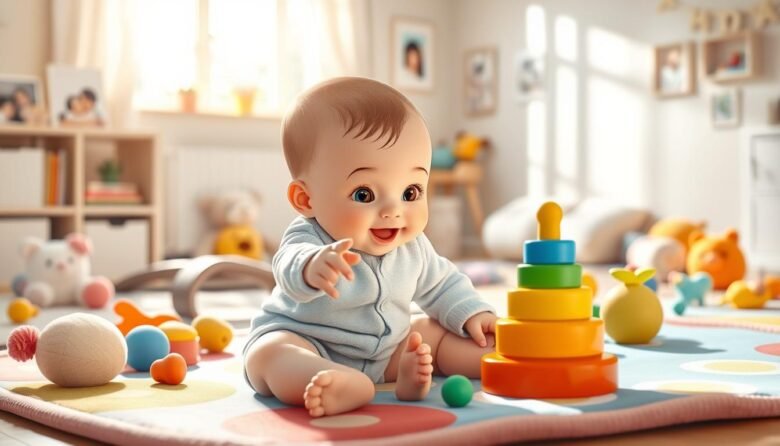
My name is James, and as a first-time dad I remember the 10 month mark clearly. Claire, my daughter, tried to climb the bookshelf while I sipped coffee. That moment showed me how much a baby notices around them.
Their development is fast now. At this age babies test cause and effect. Claire dropped her spoon from the high chair and watched how I reacted. It was play, but also serious work for her mind and brain.
This article is written to give you clear information and calm tips. I will show simple activities that help growth and protect your sanity. You will see how your child uses language, play, and routine to connect with the world.
Welcome to the Ten Month Milestone
Expect a surge in activity as your little one explores every reachable corner. I remember how Claire moved nonstop, turning each rug and toy into a small adventure.
At this stage the growth pace is striking: many infants head toward nearly tripling their birth weight by their first birthday. Healthcare providers track this with growth charts to confirm healthy progress during these months.
You may notice a mix of eagerness and caution. Your old baby will try to push away for independence while still checking back for comfort. That tug-of-war is normal and shows emotional and motor development at work.
Movement changes quickly now. Babies in this phase test standing, and you will soon spot attempts to pull up and cruise along furniture. Enjoy the wild ride—this time is short but full of milestones.
Physical Growth and Movement Milestones
Movements grow more intentional as tiny explorers test standing and crawling. I watched Claire rock on the floor for weeks before she learned to move forward with better coordination.
Cruising and Standing
Cruising starts when a child uses hands on furniture to shift weight and step along the sofa. This builds balance and confidence in a safe way.
You can help baby practice balance by showing them how to bend their knees to return to the floor after pulling up. Short, guided practice sessions work best.
Crawling Progress
Many infants progress from belly scooting to crawling with their belly off the floor between six and these months. That shift is a key part of strength and coordination.
On their back, a baby may grab toes or arch their head and shoulders to look around. Those small moves grow fine motor and core motor skills that matter later.
Understanding 10 Month Old Baby Learning
I notice how quickly a child links names to things. Long before clear speech appears, your little one can point to a favorite toy when you say its name.
Mimicry matters: they copy how you use objects, like pretending a phone call. That play builds practical skills and boosts communication.
Photos of family help with facial recognition. Show pictures and say names. This helps the mind understand people are still there even when out of sight.
The brain is busy matching words to objects and routines. You will see gestures, expressions, and simple handed exchanges that mirror how your family interacts.
Talk often, narrate small tasks, and celebrate attempts at copying. I found that steady, warm speech helps a child absorb more than you expect.
Supporting Communication and Language Skills
Quiet glances and tiny motions often stand for whole sentences in a young child’s world. I watch how small cues carry meaning and guide my replies.
Responding to Gestures
Notice and respond quickly. When your baby waves their hands or locks eyes with you, reply right away. This shows their communication has value and encourages more attempts.
Try simple sound games outdoors to help locate distant noises. I say things like, “Do you hear that tweet?” and pause so my child can turn toward the sound.
If your child makes a made-up name for a toy, repeat the real name during play. This gentle correction links the familiar word to the object without pressure.
Watch for head shakes or nods; these early signals are real language skills. Respond with a question and a nod back to show you understand.
Small responses build trust. Answering gestures and little sounds in these months strengthens bond and supports steady development of communication skills.
Engaging Play Activities for Your Little One
Playtime now becomes lab time: each toy is a tiny experiment in motion and cause. These simple activities help the child test ideas and build new skills while you watch and cheer.
Sensory Bins
A sensory bin with uncooked couscous or dry pasta offers safe, noisy fun. I let a small cup, spoons, and safe lids sit in the bin so fingers sift and scoop.
This boosts fine motor skills and touch awareness. Short sessions on the floor make cleanup easier and keep the play focused.
Object Permanence Games
Peekaboo with family photos or hiding a toy under a cloth teaches that objects still exist when out of sight. I use quick, repeated rounds so the child connects the action to the idea.
These games support memory and social interaction and are great during quiet times with people the child knows.
Physics and Gravity
Roll a ball through a tunnel or slide a tube down a ramp to show cause and effect. Knocking over a tower of blocks is a fun way to explore gravity and motor coordination.
Let the child repeat each action. Repetition helps the brain link action to result, and it builds confidence with toys and objects in the play space.
Navigating Feeding and Self Feeding
Mealtime is now a tiny classroom where a child practices motor control and independence. I track calories loosely: most infants need about 750 to 900 calories daily, with roughly half from breast milk or formula and the rest from solids.
Use a trainer cup with two handles to help hand-to-mouth coordination. A simple cup teaches grip and sipping while cutting spills and frustration.
Aim for three main meals and two snacks each day to keep energy steady. Routine helps this stage of development and makes practice regular without pressure.
It is perfectly normal to let baby make a mess while they try a spoon or pick up soft fruit and tofu pieces. Those messy minutes build fine motor skills and finger control.
Be patient: manipulating different objects and textures takes time. As they master self-feeding, you will notice better motor skills and coordination — clear signs of healthy development during these months.
Managing Sleep and Separation Anxiety
Sleep can shift quickly at this stage, and many parents notice more night wakeups as separation anxiety grows. Ten-hour stretches are common, but most infants sleep about 10 to 12 hours at night with two naps during the day.
I find steady routines help. A calm pre-bed read and quiet dim lights signal that it is time to rest. Keep the same order each night so the child learns cues for sleep.
Handling Nighttime Wakeups
If your baby wakes, move slowly. Pat them gently and speak in a soft voice to show you are near without turning on bright lights.
Avoid rocking or feeding to sleep every time. Repeatedly rewarding night wakings can teach your child to expect attention each time they stir.
During the day, practice brief, reassuring departures. Let the child use a favorite toy for comfort; this supports emotional growth and brain development.
Essential Health and Dental Care
Early mouth care sets the stage for healthy teeth and confident smiles. I make cleaning a short, calm habit so the child learns brushing feels normal.
Wipe gums with a soft washcloth or an infant toothbrush even before teeth appear. If teething causes fussiness, rubbing the gums with a clean finger can soothe them fast.
Never let a toddler fall asleep with a bottle. Nighttime bottles can cause tooth decay and long-term dental issues for your child.
Introduce new foods one at a time to watch for allergies. This cautious approach helps you spot reactions and keeps feeding safer during these months of rapid development.
By age three, most children have primary teeth. Aim to brush twice a day with a soft brush as part of a steady routine that builds comfort with touch and tooth care.
Quick note: a fever between 102 and 105°F can signal roseola, a common viral illness. Call your pediatrician if that happens so you get clear next steps.
Preparing for Life on the Move
When movement picks up, small changes at home make big differences for safety. I began by blocking stairs with secure baby gates so open areas stay safe while my child explores.
Simple objects fascinate—empty boxes, paper tubes, and soft lids become favorite toys. I keep a few safe items within reach and move small pieces out of sight to prevent choking hazards.
To support motor skills, I switched the walker for a push car with a bar. It gives steady hand support and feels safer than older walkers I’ve seen.
Reading also matters while on the move. Sturdy board books are perfect for quick snuggles and for teaching words as my little one cruises around. Short reading moments build focus and language.
In short, childproofing, choosing simple play objects, and adding firm books and a push car helped me relax and enjoy exploration more.
Conclusion
Small routines and repeated play quietly shape big shifts in a child’s growth. I wrote this article to give clear information and simple ideas you can use right away. Take time to notice tiny wins; they add up in a meaningful way.
Enjoy reading and short games with your baby every day. Those activities help language, build skills, and feed the brain. Children learn best through warm play and steady family moments.
You are doing a great job. Trust your instincts, keep practicing simple routines, and savor the words and first steps as they come.

Dad. Engineer. Survivor of the first year. I’m James Calloway, and my daughter Claire is the reason I started writing. When she was born, I went looking for honest content written for dads — not parenting manuals, not diaper commercials, not advice from people who seem to have forgotten how hard the first year actually is. I didn’t find much. So I wrote it myself. The Dad Year is everything I wish someone had told me before that first night home. No expertise, no credentials — just a dad who took notes.