Somewhere around month four, I started seeing ads for baby food makers. Sleek little machines that steam and blend and puree everything into perfectly portioned organic goodness. The marketing was very confident: real dads make their own baby food. Processed pouches are for people who don’t care enough.
I bought one. I used it exactly four times. Then I bought a pack of pouches at the grocery store and never looked back, and I have exactly zero regrets about this decision.
Here’s an honest breakdown of both options, from someone who has tried both and has no interest in making you feel bad about whichever one you choose.
When Homemade Baby Food Makes Sense
Making your own baby food is genuinely worthwhile under the right conditions. If you enjoy cooking, if you have time to batch-cook and freeze portions on weekends, and if you want full control over ingredients, it’s a solid choice. You know exactly what’s in it — no added sugar, no preservatives, no ingredient lists with words you can’t pronounce. You can also introduce flavors that aren’t available in commercial options, which some parents care a lot about.
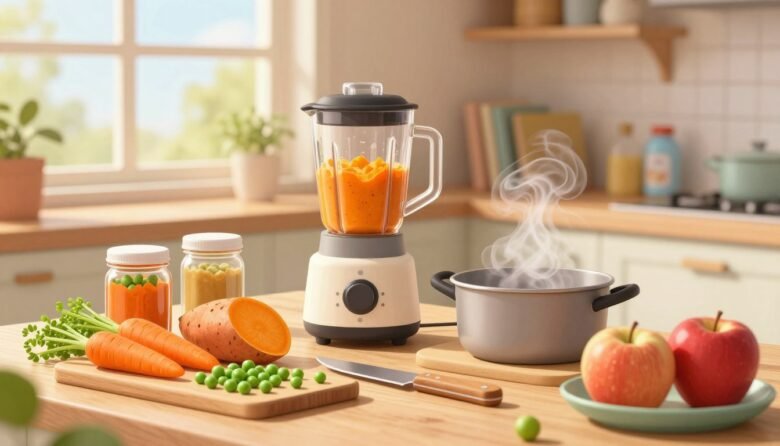
The actual process isn’t complicated. Steam or roast whatever vegetable or fruit you’re introducing, blend it with a little water or breast milk until smooth, portion it into ice cube trays, freeze, and transfer the cubes to a labeled bag. Each cube is roughly one ounce. Thaw as needed. That’s the system, and it works well when you have the bandwidth for it.
The cost difference is real. A sweet potato costs about a dollar and makes ten to twelve portions. A commercial pouch with roughly the same amount of food runs between a dollar fifty and two fifty. If you’re doing this three times a day, that adds up over several months.
When Store-Bought Makes More Sense
Most of the time. That’s my honest answer.
Commercial baby food — the pouches, the little jars, the cups — is nutritionally fine. The idea that it’s somehow harmful or inferior to homemade is largely marketing by companies selling you baby food makers and organic meal delivery subscriptions. Pediatricians are not telling parents to avoid store-bought baby food. The regulations on commercial baby food are strict, and the products on the shelf are safe.
What store-bought gives you is time and convenience, which in the first year of your baby’s life are not luxuries — they’re survival resources. You’re not failing your child by grabbing a pouch of pureed peas on your way out the door. You’re feeding them. That’s the job.
Pouches are also genuinely useful for travel, for daycare, for the meals where cooking anything is simply not happening. They have a long shelf life, they require no prep, and your baby will eat them without complaint. Claire went through a serious butternut squash pouch phase around month seven that I was not going to argue with.
About the Baby Food Makers
You don’t need one. I say this as someone who owns one. A regular blender or food processor does the same job. A hand blender works fine. The dedicated baby food makers are marketed with a lot of confidence, but they’re essentially a steamer and a blender combined into one machine that takes up counter space and has more parts to wash.
If you want to make your own baby food and you already have a blender, you have everything you need. If you don’t own a blender, buying a basic one for twenty dollars accomplishes the same goal as a baby food maker that costs four times that.
What Actually Matters at This Stage
The goal of introducing solids — which typically starts around six months — is exposure, not nutrition. Breast milk or formula is still doing the heavy lifting nutritionally. You’re introducing flavors, textures, and the concept of eating. Whether that introduction happens via a homemade butternut squash puree or a store-bought pouch of the same thing is genuinely not the variable that determines your baby’s relationship with food.
What does matter: variety. Introduce a wide range of flavors and vegetables early. Don’t just stick to the sweet stuff — peas, broccoli, spinach, avocado, lentils. Babies who are exposed to a diverse range of flavors in the first year tend to be less picky eaters later. That part is worth paying attention to, regardless of whether you’re making or buying.
The Bottom Line
Do both. Make a batch of sweet potato puree on Sunday when you have the time and the energy. Keep a box of pouches in the cabinet for every other situation. There’s no medal for doing it one way exclusively, and there’s no shame in doing whatever keeps your baby fed and you sane.
The baby food maker, though — you can skip that. Save the counter space for the coffee maker. You’ll need it more.

Dad. Engineer. Survivor of the first year. I’m James Calloway, and my daughter Claire is the reason I started writing. When she was born, I went looking for honest content written for dads — not parenting manuals, not diaper commercials, not advice from people who seem to have forgotten how hard the first year actually is. I didn’t find much. So I wrote it myself. The Dad Year is everything I wish someone had told me before that first night home. No expertise, no credentials — just a dad who took notes.