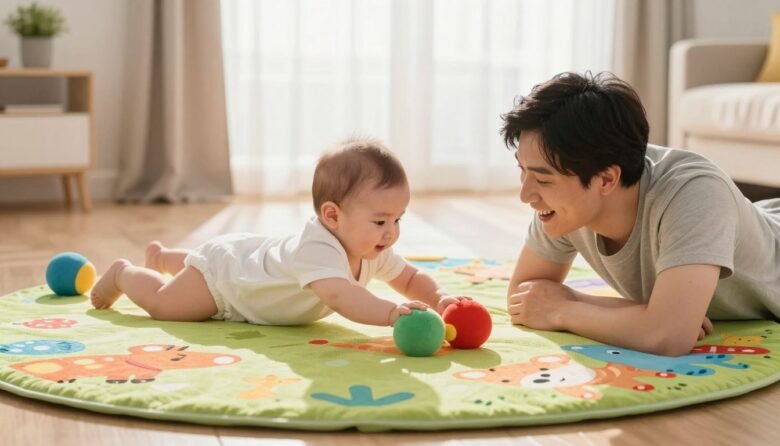
I’m James, a dad who watched Claire go from a sleepy lump to a curious little one in what felt like a blink. This month felt like the first time she truly noticed me. I spent nights reading about development and tips on this page, trying to get it right without turning play into a checklist.
What mattered most was simple floor time and being present. I learned that expensive toys do not beat hanging out on the rug (doing the famous tummy-time), talking, and making silly faces. Watching Claire find her hands was wild and quiet at once. That tiny discovery made the whole thing click for me.
Keep sessions short, follow her lead, and enjoy the noise. The American Academy of Pediatrics suggests tummy time early on, and a few focused minutes of play go farther than an hour of worry about schedules.
You do not need to be a pro to bond. If you feel overwhelmed, know you are doing better than you think. Keep at it, friend.
Welcome to the Five Month Milestone
These months blur fast, but at this stage I started to see real personality peek through. Reaching this milestone felt like a small victory after the newborn haze.
Claire began holding her head with new confidence while we played on the rug. It was wild to watch how much development can happen in just a few weeks as she became more alert and aware.
Now the activities are less about instruction and more about being present. Short bursts of interaction, face time, and gentle talking mean so much to a little one learning trust and curiosity.
Every day brings tiny wins. Even when I was exhausted, those intense looks from Claire reminded me why I kept showing up. You are doing great if you are searching for ways to play and connect — that dedication already matters.
Understanding Your Baby at This Stage
I began to watch strength and curiosity show up in small, clear moments on the rug. Over these months I learned to read tiny signals and follow Claire’s lead.
Physical Milestones
Core strength improves fast, and I remember Claire finally rolling from her tummy to her back. That roll meant neck and shoulder muscles were getting stronger.
Tummy time helped a lot. Short, focused sessions built the skills she needed to push up and reach for toys.
Cognitive Growth
You will notice tracking with the eyes and a growing interest in faces. My child started to follow bright colors and reach for objects to explore with their mouth.
Reading books, even if they get chewed, supports language development. I kept talking and naming things on the page. Little changes stack up into big milestones.
Keep simple activities short and frequent. Your little one is learning every minute you spend together.
Best 5 Month Old Baby Activities for Daily Play
Some of the most memorable play came from things I already had in the kitchen and living room. I started using wooden spoons, measuring cups, and bright washcloths to spark curiosity.
One of my favorite activities was blowing bubbles. Claire would track each floating circle with pure amazement, which helps visual tracking and cause effect learning.
Tummy time stayed on the daily list. I added colorful toys to keep my little one reaching and rolling toward new objects. Short bursts worked best.
I also tried shallow water play in a supervised bin. A few splashes and a safe toy turned an ordinary day into focused sensory play and gentle discovery.
Use simple items to teach cause and effect: drop a ball, shake a spoon, or hide a toy under a cloth. These small experiments support development and make milestones visible.
You do not need fancy toys — just presence, a few safe objects, and a willingness to play. Every day gives you one more chance to engage and enjoy this short, joyful month.
Building Fine Motor Skills Through Exploration
Watching tiny fingers close around a toy felt like the start of a new kind of discovery. At this stage I focused on short, simple moments that let my little one practice reaching, grasping, and bringing objects to the mouth.
Sensory Play Ideas
Introduce textures. I used fuzzy blankets, crinkly paper, and bumpy teething toys so hands could learn different feels. This supports motor skills and sensory development in short bursts.
Place toys just out of reach. A toy or cloth a few inches away encouraged reaching and improved hand-eye coordination while keeping sessions calm and playful.
Try safe water play. A shallow, supervised bin with floating toys made a great fine motor activity for a day at home. It holds attention and teaches cause and effect.
Remember: not every toy will grab interest. I kept the routine flexible and enjoyed watching Claire discover which objects she liked. Small, frequent practice builds the coordination she needs for the next milestones.
Strengthening the Bond Through Social Interaction
What surprised me was how simple social play—no fancy toys—changed how we related to each other. Short, regular moments of face time helped Claire learn to read expressions and respond.
Making Silly Faces
I made faces and watched her eyes light up. Making silly faces was the best way to get Claire to laugh and it really helped us build a strong social bond.
Try a mirror game: show her a reflection, point to faces, and pause so she can copy sounds and gestures.
Laughing Together
Laughing broke the tension on hard days. We used little noises, peekaboo, and soft tickles to invite smiles.
Those shared laughs help social skills and make the world feel safe. Laughing also makes it easy to engage baby and enjoy the moment.
Reading Aloud
I kept reading short books aloud during quiet time. Hearing words, rhythm, and different sounds supports language development and listening skills.
Even when tired, a few pages or a soft song strengthens connection and teaches that my voice is a steady, comforting object in her day.
Making the Most of Your Time Together
Putting down my phone turned ordinary minutes into real learning for both of us. I found being fully present helped with early development more than any expensive toy.
Keep sessions short and hands-on. Try mirror moments, gentle tummy time with a bright book, or letting your child explore different textures. These simple acts support motor skills and social skills.
Roll a soft ball across the rug to build hand-eye coordination. Let them handle objects with varied colors and sounds so they learn cause and effect. A cloth, a teething ring, or a crinkly page work fine.
I also talked through our day while we sat together. Naming faces, colors, and actions helped language and made each minute count toward milestones.
It all comes down to this: find a way to play that fits your routine, follow your little one’s lead, and enjoy the small wins. Those moments add up in big ways.
Keeping Playtime Safe and Simple
Every play session started with one rule: stay close and watch. Safety made our time together relaxed and fun, and it helped the little one explore with confidence.
Keep it simple. I chose plain household objects that were clean and safe for hands and mouths. Simple toys and varied textures teach cause effect and support fine motor skills without clutter or risk.
Supervision During Water Play
Water play is magical but needs constant supervision. I was always within arm’s reach when a bin or sink came out, and I never left the area, even for a moment.
I checked for hazards before we began and picked toys that floated and were chew-safe. Tummy time and shallow water can build coordination, cause effect learning, and interest in colors and sounds when done safely.
You are doing a great job. Watch closely, choose safe objects, and keep sessions short. That steady presence teaches trust and lets your child learn motor skills while staying protected.
Final Thoughts on Your Journey as a Dad
What stuck with me most was how simple touch and talk moved development forward. Your journey as a dad is just beginning, and these months are the start of many memories.
I hope this page has given you the confidence to try new activities and enjoy small wins. Every child develops at their own pace, and that is okay.
Some days feel like winging it. That is part of the way we learn. Keep focusing on social skills and language — your voice matters more than any toys or fancy objects.
Stay present, savor the time, and know you are doing a fantastic job for your child as you navigate these early milestones.

Dad. Engineer. Survivor of the first year. I’m James Calloway, and my daughter Claire is the reason I started writing. When she was born, I went looking for honest content written for dads — not parenting manuals, not diaper commercials, not advice from people who seem to have forgotten how hard the first year actually is. I didn’t find much. So I wrote it myself. The Dad Year is everything I wish someone had told me before that first night home. No expertise, no credentials — just a dad who took notes.