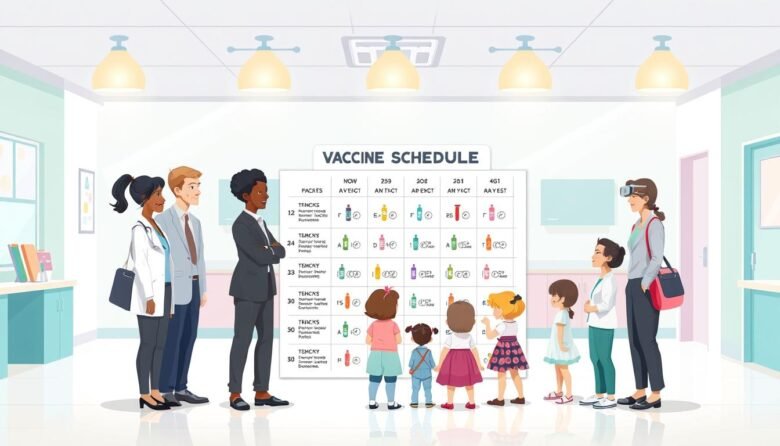
I’m James, a dad who learned fast that keeping a young child healthy is a practical job, not a science experiment. When Claire turned 2 years old I felt like I was assembling furniture without instructions. The visits, the forms, and the list of every dose can make you tense.
I remember sitting in the pediatrician office with Claire at just a few months and staring at the calendar. It all looked like a mountain. I kept a simple log of each visit and each dose. That small habit saved my sanity and kept us on track.
Follow the plan, and by age two your child should be protected against 16 vaccine preventable diseases. You do not need a medical degree to get the basics. Focus on dates, the right doses, and the gaps in months between shots. It’s about lowering risk, not chasing perfection.
Stick with it. You’ve got this.
Why I Started Tracking the Baby Vaccinations Schedule First Year
I started logging each dose because I wanted certainty, not guesswork. Keeping a simple record turned planning doctor visits from stressful to manageable.
Between 12 and 23 months of age, a child gets several important vaccine doses that build on earlier protection. I noted the exact ages and the gaps in months so I never missed a follow-up shot.
Tracking felt obsessive at times, but it was practical. Knowing when the next dose was due lowered my worry about disease risk and helped me focus on recovery days after visits.
Most people don’t realize how many doses are needed until they read the clinic chart. Sticking to the recommended ages and keeping a clear log saved me time, kept Claire healthier, and cut down on needless stress.
My First Realization as a New Dad
The day I watched Claire get that round of shots I realized parenting asks you to choose courage over comfort. In that moment a plan on paper turned into real time care and responsibility.
A Personal Moment with Claire
I remember the exact time Claire received her first round of shots. She looked up at me with those big eyes as if asking why I was letting this happen. That single dose felt enormous to both of us.
It is tough to watch a child get medicine, but I knew it lowered long‑term risk. We spent the rest of the afternoon cuddling on the couch. I saw that being a parent means doing hard things so they do not have to.
Every vaccine over the next few years and each follow‑up dose marked progress. I tracked ages and months between visits so I never missed a gap. If I stayed calm, Claire usually settled faster and the visit took less time for everyone.
Little moments like that changed how I thought about protection from disease.
Understanding the Basics of Immunization
Understanding the basics of immunization turned planning visits into straightforward steps. Immunization is the process where a vaccine trains the immune system to recognize and fight a disease.
I read about how each vaccine triggers protection and why the recommended age matters for the best response. Following the timeline of doses and the gaps in months helps the immune system build strong, lasting defense.
I learned that when you follow the recommended age and doses, you are giving a child protection that often lasts for years. It feels like adding a reliable shield that lowers risk of serious diseases as they grow.
I always asked the doctor about the next recommended age for upcoming doses so I could mark visits on the calendar. That habit kept appointments clear and made the whole vaccination process easier to manage.
The Importance of Protection Within Hours of Birth
Right after birth I learned that one small dose can change a lifetime of risk. The start of care in the hospital sets an important tone for a child’s health in the months and years ahead.
The Birth Dose
For infants with a birth weight of ≥2,000 grams who are medically stable, doctors often give one dose within 24 hours of birth. This early vaccine is usually given while you are still in the hospital.
Preventing Chronic Infection
Getting that initial hepatitis B dose within hours birth is a critical step to stop infection before it begins. Hepatitis B can cause liver damage and cancer later in life, so early protection matters.
I was surprised to learn how much difference one dose can make. Preventing a chronic infection lowers long‑term risk for people and for children as they grow.
Managing the Early Months of Doctor Visits
I learned to treat the early months of appointments like a small, steady project.
Keeping a simple calendar and a short log made tracking each dose much easier. I noted the age and the gap in months for every visit so nothing slipped through when sleep was scarce.
For example, the rotavirus vaccine comes in a three‑dose series at 2, 4, and 6 months. Knowing those exact months kept me from missing a needed vaccine and reduced long‑term risk for diseases that vaccines prevent.
I scheduled appointments in the morning. Claire was usually calmer then, and shots went smoother. Each visit also became a chance to ask staff simple questions about the purpose of a vaccine or to confirm my child was meeting milestone ages.
Short logs and friendly questions to clinic staff turned chaos into a manageable routine. That small habit saved time, lowered stress, and helped us keep on track for the coming years.
Why We Focus on Hepatitis B Prevention
I learned that preventing hepatitis B is less about panic and more about finishing a simple series of doses.
Hepatitis B is an infectious disease that can cause serious liver damage and even cancer later in life. That risk makes early action important for a young child.
The vaccine comes in three key doses: one at birth, a second at about 1 to 2 months of age, and a third between 6 and 18 months. Spreading the doses over those months helps the body build strong immunity over the years.
I made sure Claire completed her hepatitis B series because I wanted to remove the chance of a chronic infection as she grew. Finishing each dose on time lowered our long‑term risk and gave real peace of mind.
Many people overlook this protection, but it is vital for long‑term health. Follow the recommended ages, track the months between visits, and you give lasting defense against a serious disease.
Protecting Against Serious Bacterial Infections
Hib stood out to me as a threat we could prevent with a few well-timed visits.
Understanding Hib Disease
Haemophilus influenzae type b (hib) is a dangerous bacteria that can cause meningitis, brain damage, or hearing loss in children under 5 years of age. That reality made me treat those visits as non-negotiable.
The hib vaccine is given as a four‑dose series at ages of 2, 4, 6, and 12–15 months. Each dose adds protection, and the gaps in months matter for building strong immunity.
Protecting against serious bacterial infections like hib is a major reason I followed the recommended timeline for my child. I made sure Claire received every dose because the infection can be deadly or cause lasting harm.
Talk to your clinician about the exact ages for doses and mark the months on a calendar. Finishing all doses lowers risk and helps children grow with better protection for years to come.
The Role of the Polio Vaccine
Polio once paralyzed whole communities, so its vaccine feels like a quiet public victory.
Polio is a disabling, life‑threatening disease caused by poliovirus. It can infect the spinal cord and cause paralysis. The vaccine stops the virus before that happens.
The recommended series includes four doses given at about 2 months, 4 months, 6–18 months, and again at 4–6 years of age. Each dose builds stronger protection over the years.
The role of the polio vaccine is to keep our country polio‑free by preventing the virus from reaching a child’s spinal cord. I read that polio was once a huge fear for many people, but thanks to vaccines it is now very rare here.
Claire received her polio doses alongside her other shots, which made it simple to track progress. It is a relief to know this disease is no longer a common risk for children in the United States.
Always check with your doctor to confirm a child has completed the full series of doses for the best protection.
Staying Ahead of Seasonal Respiratory Viruses
Preparing for respiratory season became a simple, steady habit in our household. I focused on timing so we could lower the risk of serious lung conditions during peak months.
The RSV Antibody
For very young infants, an RSV antibody (Nirsevimab) is given as a single dose between birth and 8 months. This one dose can reduce hospital visits and protect against pneumonia during the worst weeks of rsv season.
Flu Season Precautions
I also get the inactivated influenza vaccine (IIV) each autumn. Starting at 6 months of age, a child should receive one dose every year before the season peaks.
Simple timing helps: talk with your clinician about the best month to get the flu shot and plan the rsv antibody in the months that matter. I found that planning ahead during rsv season cut down on coughs, fevers, and missed days for our family.
Addressing the DTaP Series for Whooping Cough
The DTaP series stood out to me as a clear shield against three serious infections. It protects against diphtheria, tetanus, and the dangerous whooping cough called pertussis.
I learned the series is five doses at ages 2, 4, 6, 15–18 months, and 4–6 years. Each dose adds layers of defense so a child builds lasting immunity over months and years.
Why this matters: DTaP prevents illnesses that can cause seizures, breathing trouble, or worse. I tracked each appointment and felt relief after every completed dose because the risk fell a little more each time.
Keep a simple note of the months between visits and confirm ages with your clinician. Staying on the DTaP timeline is one of the most effective steps people can take to protect children from these serious diseases.
Why We Keep Up with Pneumococcal Conjugate Doses
Making sure those pneumococcal conjugate doses happened on time became a small habit with big payoff.
This vaccine protects against bacteria that cause pneumonia, blood poisoning, and meningitis. The protection matters because these infections can be serious for young children under five years.
The recommended series is four doses given at about 2, 4, 6, and 12 to 15 months. Spacing the doses by the right months helps the immune system build steady defense.
I kept Claire on track for each dose because finishing the full series lowers risk over the coming years. It was one of those vaccines I did not hear about much, yet it felt critical for our child’s health.
Always check the chart to confirm the next dose and the exact ages. Staying aware of the months between visits made keeping up simple and gave me real peace of mind.
The Importance of Measles Mumps and Rubella Protection
I learned quickly that the MMR two‑dose plan is a small, powerful step toward long‑term safety for children. The recommended ages are clear: one dose at about 12 to 15 months and a second dose at 4 to 6 years. Each dose, given at the right age and months apart, builds stronger immunity against measles, mumps, and rubella.
The importance of measles, mumps, and rubella protection cannot be overstated. These diseases spread fast and can cause serious complications. I made sure Claire got her MMR doses as soon as she reached the recommended age so I would not risk her getting sick.
Measles can cause brain swelling, and mumps and rubella carry their own dangers. Following the two‑dose vaccine plan is a simple way to give a child long‑term defense. Stick to the ages and the months between doses to lower risk and help keep children healthy for years to come.
Dealing with Chickenpox Risks
When I learned how severe chickenpox can be, I made a short plan to prevent it. Varicella is a two‑dose vaccine given at about 12 to 15 months and again at 4 to 6 years of age. That simple timing matters because each dose adds protection over the years.
Chickenpox can cause infected sores, brain swelling, and pneumonia in some people. Knowing the exact age for each dose helped me track the months between visits and reduce overall risk for my child.
Why it helped me: the two doses make the vaccine much more effective at stopping the itchy rash and fever. I remembered my own bout with chickenpox and wanted Claire to avoid the same ordeal.
I felt relief after her second dose because she was fully protected against the virus. Talk with your clinician about the recommended ages and mark the months on a calendar so you know a child has received both doses.
Keeping Track of Hepatitis A
Tracking hepatitis A was an easy step that delivered real peace of mind. The hepatitis A vaccine is given as a two‑dose series between 12 and 23 months, so I kept both dates on my calendar.
This simple pair of doses prevents a serious liver disease that can, in rare cases, cause liver failure and death. Knowing the exact months between shots helped me book visits without scrambling.
I treated the appointments like any other routine: mark the date, confirm the doctor’s note, and tick the box when the dose was given. It is a small action that matters because the virus spreads easily among children and adults in close contact.
Talk with your clinician about the right ages and the best timing so a child completes both doses on time. I found that clear dates and a short log made vaccination one less thing to worry about.
Looking Ahead to Future Immunization Needs
When I map out the next set of doses, I feel more in control of Claire’s long‑term health. Planning ahead turned future visits into simple tasks instead of surprises.
Adolescent Health Milestones
One important step: the Tdap booster is given as a single dose at about 11 to 12 years to keep protection current. I marked that age on my calendar so the gap in months between childhood and teen shots is clear.
The HPV vaccine is a two‑dose series, also recommended around 11 to 12 years. Getting both doses on time helps protect against disease later in life.
I plan to keep a clear record of every vaccine and dose so Claire has an easy health history when she’s older. That short habit of logging ages and months years ahead makes follow‑up visits smoother and keeps health care simple for our family.
Conclusion
In summary, a few small routines helped me stay on top of ages, appointments, and the months between doses.
I kept a short log, confirmed one thing with the clinician at each visit, and checked that every dose was recorded. That made follow‑ups simple and reduced stress.
Following the plan for each vaccine and tracking gaps in months lowered our chance of serious disease. It also made it easier to show a clear history for any new provider.
Every child benefits when a parent stays informed and keeps appointments. Keep the notes short, ask questions, and celebrate each completed dose — you are doing a great job. You’ve got this.

Dad. Engineer. Survivor of the first year. I’m James Calloway, and my daughter Claire is the reason I started writing. When she was born, I went looking for honest content written for dads — not parenting manuals, not diaper commercials, not advice from people who seem to have forgotten how hard the first year actually is. I didn’t find much. So I wrote it myself. The Dad Year is everything I wish someone had told me before that first night home. No expertise, no credentials — just a dad who took notes.