I have coached families through sleepless nights for years, and I rely on steady background sound as a core tool. A landmark study in the Archives of Disease in Childhood found that 80% of newborns fell asleep within five minutes when exposed to consistent sound. That research matches what I see in real nurseries.
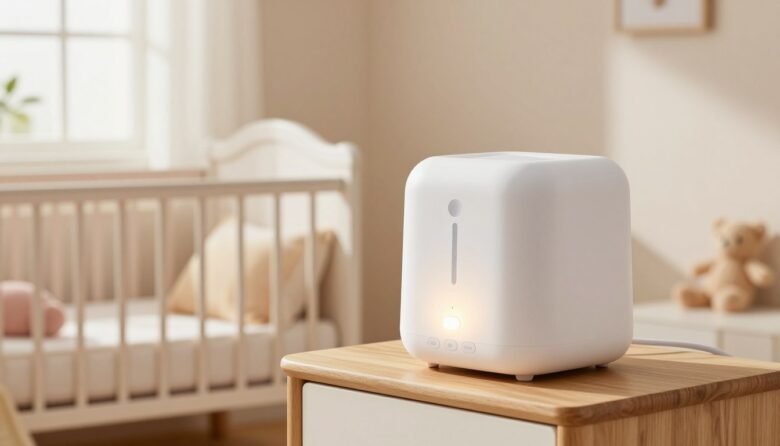
Choosing the right device means thinking about volume range, decibels, and the types of sounds that help babies stay asleep. I recommend considering portable options and units that fit near the crib so you can tune the range and timing to your child.
In my family, a reliable sound machine turned many rough nights into restful ones. When used correctly, steady sound mimics the womb and blocks household noises. This creates a consistent sleep space that helps your little one fall asleep and stay asleep longer.
Why White Noise is a Game Changer for Your Nursery
In my practice I’ve seen how steady ambient sound can turn a restless nursery into a calm one. A consistent hum helps mask sudden household noises and gives little ones a familiar backdrop for sleep.
Choosing the right sound device depends on room size and the range you need. Check decibels so the sound soothes without overwhelming a child’s sensitive ears.
- Creating a calm environment is a top priority; a sound machine often delivers predictable results.
- Use steady white noise to help babies settle and stay asleep by blocking sudden noises.
- Consider units with night lights or varied sounds and an app for flexible time settings.
- Whether you pick a fan-like option or digital sound machines, the right choice brings rest for the whole family.
I always recommend testing volume near the crib and setting a safe time or app control. Investing in a reliable white noise machine can change night routines and improve sleep for parents and children alike.
Understanding the Science Behind Soothing Sounds
I often explain to parents that the sounds infants hear before birth shape their early sleep patterns. Knowing why rhythmic sound calms a child helps you choose the right device for the crib or travel.
The Womb Environment
The womb is surprisingly loud and full of steady whooshes and heartbeats. That constant input gives babies a template for what feels safe.
When you use white noise that mimics those low, steady tones, babies often settle faster and stay asleep longer. This recreates familiar soothing sounds and comfort.
Blocking Household Noise
Sudden noises like doors or barking break a sleep cycle. A quality white noise machine or sound machine masks those interruptions so a child can recover deep sleep.
Check decibels and the device’s volume range to keep levels safe near the crib. Many units and apps offer options and portability so your family can keep rest consistent at home or away.
- Match sound type to what soothes your infant—fan-like or nature tones.
- Test volume at crib level; aim for gentle, steady coverage.
- Choose a portable option to maintain the same sleep cue while traveling.
How to Choose the Best White Noise Machine Baby
I tell parents the most useful features are simple: adjustable volume, clear sounds, and a reliable timer. Start by testing the device at crib level so you know how loud it will be in real use.
Check the decibels at different distances. I measure near the crib and at the room doorway to confirm safe levels. Aim for steady, non-distorted tones that mimic low-frequency hums babies find calming.
Consider size and placement. A compact device fits on small nightstands and stays out of reach of a curious child. If you travel, a portable sound machine keeps sleep cues consistent across homes and hotels.
- Look for a reliable timer or scheduling via app to manage run time through the night.
- Prioritize build quality and clear audio over many gimmicks—consistent sound beats flashy extras.
- Confirm your family’s needs: simple plug-in options or devices with app integration and preset sounds.
When in doubt, test a few devices and trust what helps your child settle. The right choice combines safe volume, good sound, and practical options for your family’s routine.
Top Overall Pick for Consistent Sleep
I’ve tested many devices and the Dreamegg Lite D11 Max stands out for steady performance and simple controls. It packs 21 sound options and measures about 75 decibels at seven feet, so you can mask household interruptions without overpowering the room.
Why We Love the Dreamegg Lite
The Dreamegg Lite is compact in size and built to handle daily use in a busy nursery. Set to a moderate volume and it creates a soothing backdrop that helps a child fall asleep and stay asleep through the night.
- The D11 Max offers 21 distinct sounds, including steady white noise and a heartbeat option that many babies respond to.
- I’ve relied on the LectroFan Classic for over 10 years, and both units show strong build quality and reliable sound output.
- By keeping decibels within a safe range you get enough masking to block sudden noise while protecting tiny ears.
For families who want a durable, versatile device that travels well, the Dreamegg Lite is a smart, long-term choice.
Best Value Options for Budget-Conscious Parents
I often point families to budget-friendly options that still protect sleep and ears. The VTech Myla the Monkey gives 10 sounds and a dimmable night light in a compact package.
I recommend this noise machine when you want reliable sound without a high price. Its volume range keeps decibels at safe levels near the crib and works well for short naps or a full night.
- The compact size makes it easy to clip to a crib or stroller, so you can keep consistent sounds on the go.
- The included night light is helpful during late-night checks and diaper changes.
- While it lacks some premium features, it delivers steady sound and simple controls parents trust.
- For families watching price, this option proves you can add white noise to a routine without spending much.
I find it a practical choice for a child who needs a gentle sleep cue. Try it at crib level to confirm the right volume for your room.
Premium Features for Advanced Sleep Training
I look for features that make sleep training smoother and less hands-on. Higher-end units often add scheduling, rich sound libraries, and customizable light so a routine feels consistent from nap to night.
Smart App Integration
The Hatch Rest 2nd Gen ties its full feature set to an app. I find remote control invaluable when I don’t want to enter a dark room and risk waking a child.
The app lets you set schedules, change volume, and switch sounds from another room. That hands-off control keeps a sleep cue steady and reliable.
Subscription Considerations
Some advanced functions require a subscription, but the core device still delivers high-quality sound and an adjustable light. In my view, the base features are enough to support a growing child’s sleep routine.
- The Hatch Rest 2nd Gen offers over 40 sounds and deep app control for precise scheduling.
- Controlling volume remotely helps protect ears while maintaining consistent background sound.
- The customizable light shows color and brightness options that suit different sleep stages.
- For families using tech for structured sleep, app-based scheduling is a real time-saver.
Best Portable Devices for Naps on the Go
I keep a compact unit in my diaper bag because a small portable device often makes the difference between a short, fussy nap and a full restful one.
On the road, consistent white noise helps mask sudden sounds in restaurants, cars, and busy parks. I look for lightweight options with long battery life and a simple volume dial so I can adjust quickly.
Sound quality matters. Even tiny machines can deliver steady tones that keep a child calm and extend naps. I attach a familiar unit to the stroller frame when we travel so the cue stays the same.
- Choose a portable noise machine that is easy to use and recharge.
- Prioritize a model with long battery life and a clear volume control.
- Keep one unit dedicated to outings to preserve the nap routine.
- Test sounds in a car or café to confirm they mask outside noise well.
With a reliable portable sound machine, I can help preserve daytime sleep no matter where we go.
Kid-Friendly Designs That Encourage Calm
I focus on products that invite touch and hold so a child can settle with minimal fuss. Tactile features help turn a sleep aid into a companion, easing transitions at night.
Look for soft fabric, a gentle glow, and motion that feels reassuring. These elements combine with soothing sounds to create a consistent cue for rest.
Tactile Features for Toddlers
I recommend the Fisher-Price Soothe ‘n Snuggle Otter for toddlers who need extra comfort. It pairs a breathing motion with 12 gentle sounds and a soft, calming light.
- The Soothe ‘n Snuggle Otter uses motion plus soft tones to help a restless child relax and fall into sleep.
- Tactile elements make it feel like a plush friend, so toddlers are less likely to resist bedtime.
- The glowing light adds safety and eases night checks without waking the room.
- Durable construction stands up to play while still delivering steady white noise and comforting sound options.
- Many parents find the combo of motion, light, and sound shortens bedtime struggles and improves night routines.
I’ve seen this type of design convert tense evenings into calm ones. When a machine doubles as a companion, the whole family sleeps better.
Safety Guidelines for Protecting Sensitive Ears
I always start safety conversations with a clear rule: protect tiny ears first. The American Academy of Pediatrics recommends keeping levels near 50 decibels to avoid harm.
Place your unit at least seven feet from the crib so the sound has space to diffuse. In a small sleep space, check the decibels at crib level rather than guessing from the device setting.
- Protect hearing: keep ambient noise near 50 decibels and avoid sustained loud playback.
- Placement matters: set the device seven feet away so tones are gentle at the crib.
- Use low heartbeat or fan-like sounds at a soft volume to help babies stay asleep longer without overstimulation.
- Test different sounds and measure decibels in the actual room to confirm safety.
When used correctly, steady white noise can help babies settle and stay asleep. Safety comes first: soothing sound should support sleep, not mask it with excessive volume.
Common Mistakes to Avoid When Using Sound Machines
A few common missteps with sound devices can wake a sleeping child instead of soothing them. I want you to spot and fix these simple errors so the tool helps, not harms.
- Placement too close: keep the unit several feet from the crib to avoid high decibel exposure.
- Volume set too loud: overly strong levels can disrupt deep sleep and fragment rest.
- No timer: running the device all night may be unnecessary and can reduce its cueing power.
- Dead batteries: portable units can die mid-nap and cause a sudden, jarring silence.
- Harsh, grainy sounds: pick smooth tones; rough audio irritates sensitive ears and prevents settling.
Also, don’t rely only on a device to solve sleep issues. Combine sound with consistent routines and safe sleep habits. Choose an easy-to-use model so you can adjust settings quickly without switching on bright lights.
Final Thoughts on Creating a Peaceful Sleep Environment
Small tools used the same way each night help children learn when it’s time to rest. I encourage steady routines and a consistent audio cue so your child links familiar sounds with calm sleep.
Focus on placement, safe volume, and the same habit for naps and nighttime. Consistency helps the sleep cue hold its power and makes transitions easier for the whole family.
Safety matters: monitor decibels at crib level and pick a device with clear, gentle tones. With the right approach, your room becomes a soothing environment that supports longer, deeper rest.
Thank you for reading and trusting my guidance as you choose tools and routines that work for your home.

Dad. Engineer. Survivor of the first year. I’m James Calloway, and my daughter Claire is the reason I started writing. When she was born, I went looking for honest content written for dads — not parenting manuals, not diaper commercials, not advice from people who seem to have forgotten how hard the first year actually is. I didn’t find much. So I wrote it myself. The Dad Year is everything I wish someone had told me before that first night home. No expertise, no credentials — just a dad who took notes.